Backpacking Pakistan’s North on a Budget: A Route Guide
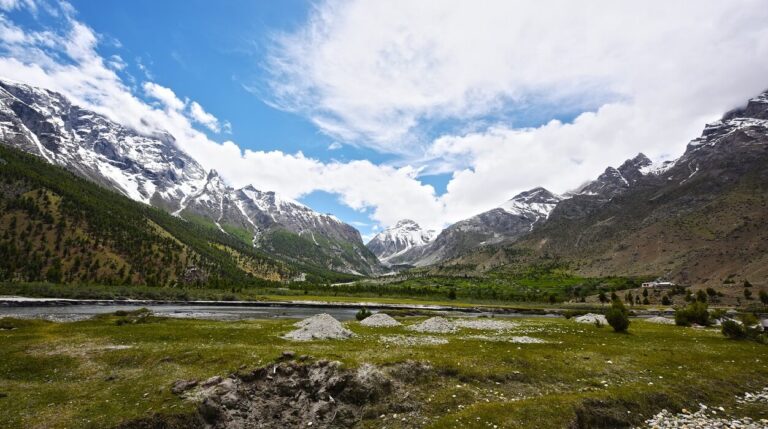
The mountains of northern Pakistan are some of the most dramatic on the planet. Peaks over 7,000 meters rise above green valleys, turquoise lakes sit beside glaciers, and centuries-old forts watch over villages where the air smells of apricot blossom. Best of all for independent travelers, this is one of the cheapest mountain regions in the world to explore. A well-planned backpacking trip through the north can cost less than $25–30 a day, including transport, simple hotels, and food.
This guide lays out a practical 12-day route from Islamabad through Naran, Gilgit, Hunza, and Skardu, with real budget numbers and the lessons I learned along the way.
When to Go
Timing decides everything in the north. The road season runs roughly from May to October. June to September is the safest window: the Karakoram Highway is fully open, guesthouses are running, and high passes like Khunjerab are accessible.
July and August bring the biggest crowds (and the highest prices) because Pakistani families travel during school holidays. For the best mix of good weather, open roads, and lower prices, aim for late May, June, or September. October is beautiful with autumn colors, but nights get cold and some hotels start closing. Avoid November to April unless you are an experienced winter traveler — many roads close and temperatures drop well below freezing.
Getting to the North
Most trips start in Islamabad. From the capital, you have three realistic options:
- By bus: NATCO and several private companies run overnight coaches from Islamabad (Pirwadhai bus terminal) to Gilgit. The ride takes 16–20 hours along the Karakoram Highway and costs around PKR 3,500–5,000 ($12–18). It is long, but the road itself is half the adventure.
- By air: PIA flies from Islamabad to Gilgit and Skardu. The flight is only about an hour and the views of Nanga Parbat are unreal. The catch is the price ($80–120) and frequent weather cancellations — never build a tight schedule around a mountain flight.
- By rented jeep or coaster: If you travel in a group of 4–6, hiring a private vehicle from Islamabad can work out surprisingly cheap per person and gives you full freedom over stops.
For a first backpacking trip on a budget, the overnight bus is the classic choice.
The 12-Day Route
Days 1–2: Islamabad to Naran and the Kaghan Valley
Leave Islamabad early and drive to Naran (about 7–8 hours, PKR 1,500–2,000 by coaster or shared van). Naran is the gateway town — lively in summer, with dozens of budget hotels starting around PKR 2,000–3,500 ($7–12) a night.
Spend your first full day at Saif-ul-Malook Lake, a stunning alpine lake a short jeep ride above town (shared jeeps cost about PKR 1,000–1,500 per person). The lake is famous in local legend — a prince is said to have fallen in love with a fairy here — and at sunrise the water turns a deep, glassy blue. Stop for fried trout at one of the lakeside stalls.
Days 3–4: Gilgit
From Naran, continue north over the Babusar Pass (4,173 m) to Gilgit. The pass is only open in summer, and the descent offers your first real view of the high Karakoram. Shared transport costs roughly PKR 1,500–2,500.
Gilgit is more of a transit hub than a destination, but it is worth a night. Walk the old bazaar, try the local apricot juice, and pick up any supplies you missed. Budget hotels here run PKR 2,500–4,000. If you need a rest day, the Kargah Buddha rock carving is a short drive out of town.
Days 5–7: Hunza Valley
This is the heart of the trip. From Gilgit, local vans and coasters run to Karimabad, the main town of Hunza, in about 2–3 hours (PKR 500–800).
Day 5: Settle into Karimabad. Walk up to Baltit Fort, a 700-year-old palace overlooking the valley (entry around PKR 600 for foreigners). The terraces below are covered in cherry and apricot orchards — in spring the whole valley blooms white and pink.
Day 6: Take a day trip up the valley. Attabad Lake is the star: a brilliant turquoise lake formed by a landslide in 2010. You can take a boat ride across it for a few hundred rupees, and the road tunnels carved through the cliffs to reach it are an experience on their own. Continue to Passu to see the famous Passu Cones — a row of sharp, cathedral-like peaks — and walk the glacier viewpoint trail.
Day 7: Drive to the Khunjerab Pass (4,693 m), the border with China and one of the highest paved border crossings in the world. The road there follows the Hunza River through some of the emptiest, grandest scenery in Pakistan. Shared jeeps from Karimabad cost around PKR 2,000–3,000 per person. Bring your passport — there is a checkpoint, and the pass sometimes closes for weather.
Days 8–11: Skardu
Return to Gilgit and catch a bus or shared van to Skardu (7–9 hours, PKR 1,500–2,500). The road follows the Indus River through a dramatic gorge — sit on the left side of the bus for the best views.
Skardu is the base for the giants: K2, Broad Peak, and the Gasherbrums are all accessed from here. As a budget backpacker you will not be climbing them, but you can still get close to serious mountain scenery:
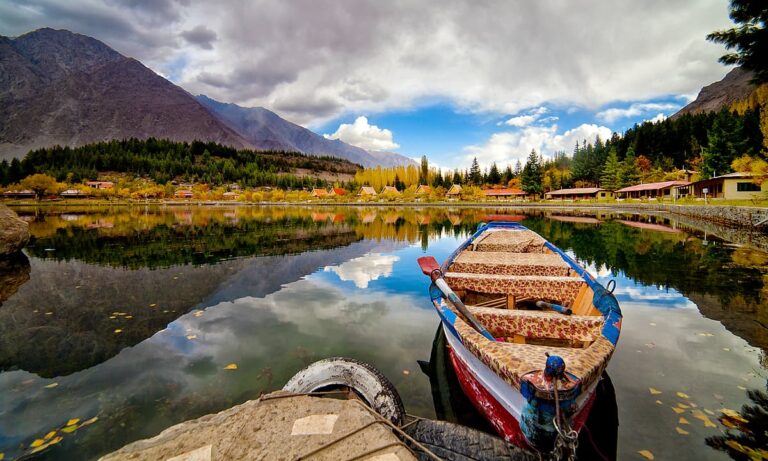
- Shangrila (Lower Kachura) Lake: The famous “Heaven on Earth” resort lake, 30 minutes from town. Entry is cheap and the red-roofed huts on the island make for great photos.
- Upper Kachura Lake: Wilder and quieter than Shangrila. A short hike, a swim if you are brave, and almost no crowds.
- Shigar Valley: An easy day trip. The restored Shigar Fort (now a Serena heritage hotel — the gardens are open to visitors) and the cold desert of Sarfaranga, where sand dunes sit beneath snow-capped peaks.
- Deosai Plains: If your budget stretches, a jeep day trip (PKR 8,000–12,000 split between 5–6 people) takes you to one of the highest plateaus in the world, home to Himalayan brown bears and endless wildflowers in July and August.
Day 12: Return
Fly or bus back to Islamabad from Skardu. Flights save a day but cost more; the bus is cheap but long. Build one buffer day into your plan either way — mountain weather and road conditions can shift schedules.
What It Actually Costs
Here is a realistic daily budget for a careful backpacker in 2026:
- Dorm or basic private room: PKR 2,000–3,500 ($7–12)
- Food (local restaurants and dhabas): PKR 1,500–2,500 ($5–9)
- Local transport (shared vans, buses): PKR 1,000–2,000 ($4–7) averaged per day
- Entry fees and small activities: PKR 500–1,000 ($2–4)
Total: roughly $20–30 per day, or $250–350 for the full 12 days, not counting your international flight to Pakistan. Traveling with a partner or small group cuts transport and room costs further, since jeeps and private rooms split easily.
Money tips: carry cash — ATMs are unreliable beyond Gilgit and Skardu, and most small guesthouses do not take cards. Pakistani rupees are easy to exchange in Islamabad. Bargaining is normal and expected for hotel rooms and private transport, but do it with a smile.
7 Budget Tips That Actually Work
- Travel in shoulder season (June or September) for lower hotel rates and fewer crowds.
- Share everything — jeeps, boats, and rooms all split 4–6 ways.
- Eat where the drivers eat. The small dhabas near bus stations serve the best dal, chapati, and chai for a fraction of tourist-restaurant prices.
- Book the first night only. Walk in and negotiate for the rest — summer has plenty of rooms outside peak holiday weeks.
- Take the bus, not the flight, between major stops. The Karakoram Highway is a sight, not just a road.
- Bring a water filter or purification tablets. Bottled water adds up over two weeks, and tap water in the mountains is often fine once treated.
- Learn ten words of Urdu. “Kitne ka hai?” (how much is it?) and a friendly “Shukriya” (thank you) go a long way with guesthouse owners.
A Note on Safety and Respect
Northern Pakistan is far safer than its reputation suggests — the tourist valleys of Hunza and Skardu see thousands of visitors every summer, including many solo travelers and families. That said, travel sensibly: dress modestly (especially women — loose trousers and covered shoulders), ask before photographing people, and respect prayer times and Ramadan customs. The local people are famously hospitable; accepting a cup of chai is almost a social obligation, and refusing one can genuinely offend. Say yes.
Final Word
Few places on earth give you this much — 7,000-meter peaks, turquoise lakes, thousand-year-old forts, and some of the kindest people you will ever meet — for this little money. The north of Pakistan rewards travelers who move slowly, spend locally, and stay curious.
If you would rather have the route, transport, and hotels arranged for you, local specialists like Bonita Travel and Tours run guided Pakistan northern areas tours that follow a similar path. But honestly, this is one of the easiest regions in Asia to do on your own — pack a bag, catch the night bus from Islamabad, and let the Karakoram do the rest.